When you set out to buy a used utility trailer, there’s a lot to consider. You need to think about the right type of trailer for your needs, whether it’ll work with your tow vehicle, and a lot more. But you can’t forget to consider where you live as well. That’s why we’re breaking down what you need, what to inspect, and where to buy used utility trailers in Colorado and New Mexico.
Know What You Need Before You Shop
Let’s start with the basic details you’ll need to know before you begin your search: your Gross Vehicle Weight Rating (GVWR) and deck configuration. Getting these wrong can make using your utility trailer inconvenient and difficult at best and outright dangerous at worst. Fortunately, we’re here to help you understand both factors to pick the right option for your needs.
Match the Trailer to Your Tow Vehicle
The GVWR tells you how much total weight your tow vehicle can safely handle and you can find it on the driver’s side door jamb and in your owner’s manual. Make sure the trailer you purchase and all the gear you plan to haul with it are well below that GVWR. Hauling anything above that number can damage your vehicle’s frame, suspension, and brakes as well as subject you to potential fines.
Choose the Right Deck Size and Configuration
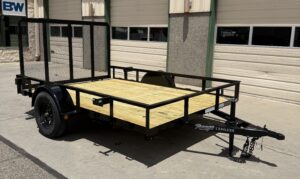
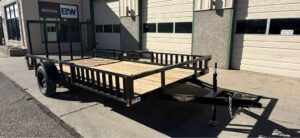
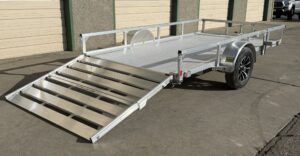
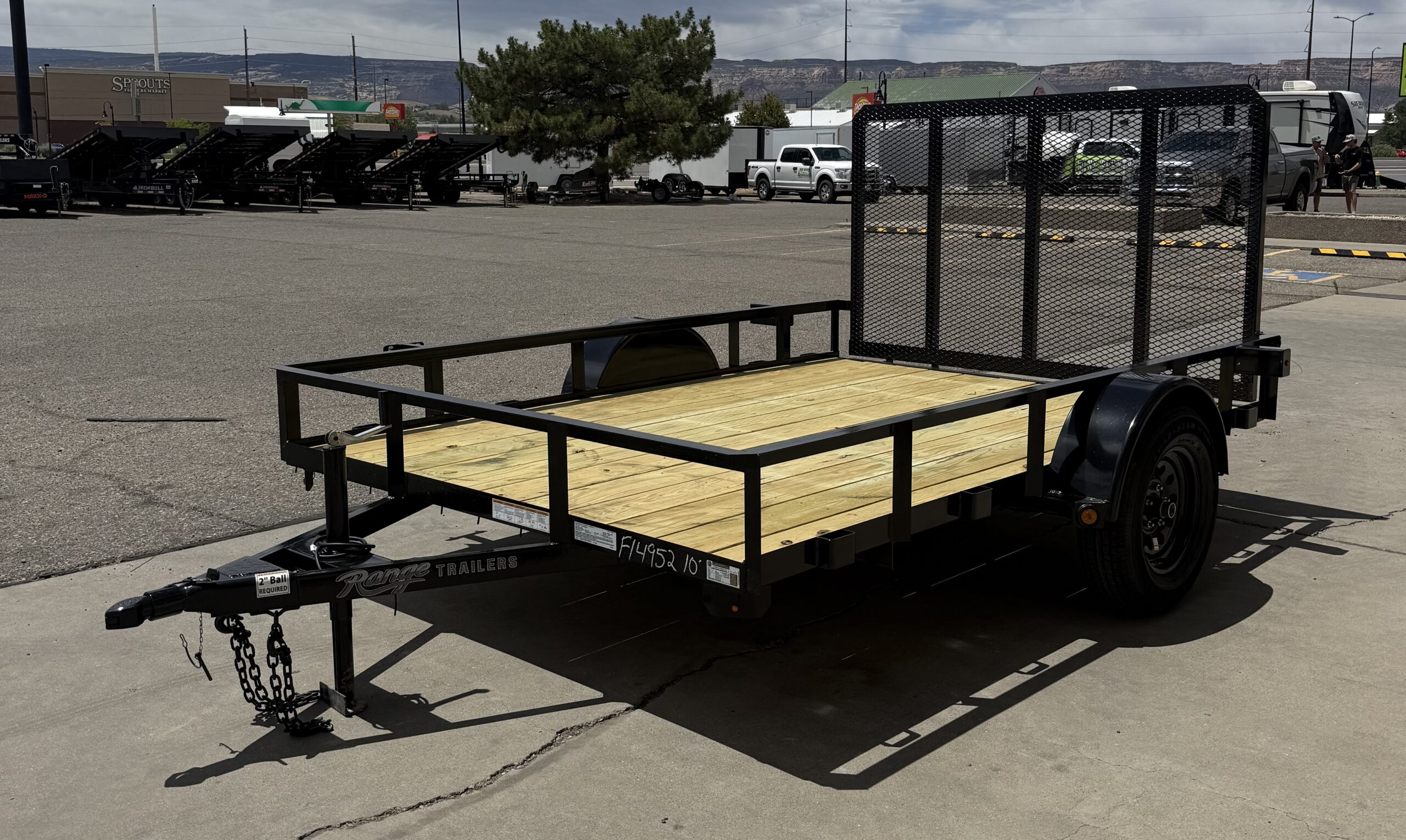
Then there’s the deck configuration. The type of configuration you buy will play a huge role in what you can haul and how easy it will be to load your trailer, particularly if you’re alone. That’s why you want to consider how you intend to use your trailer and whether you’ll have help. Here, you can find a basic rundown of the four common types and who they best suit.
| Configuration | Best-Fit Use Case |
| Open flatbed | Contractor hauling lumber, pipe, or palletized materials |
| Mesh sides | Rancher moving loose feed, landscapers, hay bales, or livestock supplies |
| Ramp gate | Homeowner loading a riding mower, ATV, or small equipment |
| Dovetail | Rec buyer or contractor loading low-clearance equipment like a skid steer or UTV |
Things to Look at When Buying a Used Utility Trailer
Once you know the weight and configuration you’re looking for you when buying a used trailer, you can start shopping around. When you’re examining a trailer online or in person, there are a few key things you’ll want to look out for to avoid making a purchase you’ll regret later. Here’s a breakdown of what to look out for.
Frame and Structural Integrity
Obviously the biggest concern for a used trailer is its condition, particularly when it comes to structural elements like the frame. For open utility trailers, surface rust isn’t necessarily a dealbreaker but deep corrosion, stress cracks at weld points, or bent crossmembers that indicate the trailer was regularly loaded beyond its rated capacity are all huge red flags.
Each one can indicate a trailer is nearing the end of its lifespan and can be outright unsafe to operate. That’s why a close inspection is so important, especially if you’re buying online.
Deck Condition
Besides the structural elements and frame, you’ll also want to look closely at the condition of the deck itself. What you look for will depend on whether the deck is wood or steel.
Wood decks, more common on trailers used for landscaping or farming, look for rotting around the edges and stake pockets. You can ask the owner how they maintained the wood, what treatments they used, etc. Steel decks tend to develop rust around low points and tie-down rings so look out for that kind of corrosion.
Tires, Wheels, and Brakes
The next thing to examine closely is the trailer’s tires, wheels, and brakes. Utility trailer tires should generally be replaced every 5 years, so check the DOT code on the tire sidewall. The final four digits represent the week and then year of manufacture. Besides their age, examine the tires for dry rot and uneven tread ware that might also indicate they need to be replaced.
For the wheels, examine them for corrosion, rust, cracks, and bends. Finally there are the brakes. Ideally you’ll want to visually examine and test them, but note that most utility trailers under 3,000 lbs GVWR don’t have brakes.
Axle and Suspension
While it’s easy to neglect a close inspection of a trailer’s axles and suspension, it’s extremely important that you do. Get under the trailer and look for damage to the main axle tube. Then look at the leaf springs for any cracks or missing leaves that might indicate suspension damage from being regularly overloaded. Also examine the bolts, shackles and bushings holding the springs to the frame. Lastly, perform a visual check to see if the wheels are splayed inward or outward.
Electrical and Lighting
Thankfully, checking the electrical and lighting on a utility trailer is a bit more straightforward. Connect the utility trailer to your tow vehicle and test all the lights and indicators and ensure the connectors are compatible.
That said, even if everything works properly you’ll still want to visually inspect the wiring to look for damage. In particular, look for brittle, cracking, or stripped insulation. Powdery or crusty green buildup can indicate corrosion while exposed copper, rust, or degraded sticky tape can point to faulty splices.
Coupler, Hitch Ball, and Safety Chains
Lastly, before buying a used trailer you’ll want to check the coupler, hitch ball, and safety chains. For the coupler, confirm it matches the hitch ball on your vehicle, examine it for wear, and confirm the latch functions properly. For the safety chains, check their tags to confirm their grade matches the GVWR or the trailer. If they’re unmarked, they should be replaced. Also look for any signs of rust or corrosion, particularly where it attaches.
Where to Buy a Used Utility Trailer: Dealer vs. Private Seller
Now that you know how to buy a utility trailer based on the type and its condition, you need to decide whether to buy from a dealer or a private seller. Look at the chart to see whether one or another is better for your needs. Of course you can always look at both options at the same time.
| Buying from a Dealer | Buying from a Private Seller | |
| Inspection history | Professionally inspected | Unknown |
| Title and paperwork | Handled at point of sale | Buyer’s responsibility to verify |
| Financing | Available | Rarely available |
| Condition transparency | Disclosed | Varies by seller |
| Price | Higher | Lower |
| Negotiability | Limited | More flexible |
What You Need to Register a Used Utility Trailer
Once you’ve bought a utility trailer, you’ll need to register it within 30 days in New Mexico and 60 days in Colorado. To do this, you’ll need a clear title that matches the VIN on the trailer frame. Be sure to confirm this before making a purchase, otherwise you’ll end up stuck trying to fix the issue down the line.
Used Utility Trailer FAQs
How many miles do utility trailers last?
Generally utility trailers last 100,000 to 200,000 miles, though how they are used, stored, and the local conditions in places like high Colorado mountains can have a major impact.
How do I know if a used trailer has been overloaded?
Overloaded utility trailers generally have damage to the frame, axles, and suspension. In particular, look for sagging frames, cracking welds, bent axle tubes, tapered leaf springs, irregular tread wear, and damaged bearings.
How do I find the manufacture date on a used trailer?
Both the federal certification sticker and the VIN number will tell you the manufacture date of a used trailer. The certification sticker will be on the front driver’s side or on the A-frame while the VIN will be stamped into the trailer’s metal tongue or frame rail.
What brands of utility trailers hold their value best?
While brand alone is no guarantee a trailer has been maintained properly. Most national name brand trailers hold their value similarly, Ironbull, H&H, Big Tex, and PJ Trailers are considered some of the best at holding value.
Find Your Next Used Utility Trailer at Pine Country
While it’s easy to get overwhelmed when wondering how to buy a used utility trailer, it boils down to determining the right type of trailer and closely examining its components to ensure everything is in good working order.
Of course, it helps to have experts who can walk you through the process and a huge inventory to choose from across convenient locations like Grand Junction, Montrose, and Farmington. If you want to avoid all the risks of private sellers, just get in touch and see what a difference our experience can make.