For people living on the Western Slope of Colorado and throughout New Mexico, utility trailers are often an essential tool for everyday life. That applies just as much to everyday homeowners and recreationalists as it does to contractors and ranchers. For them, the first question isn’t “do I need a utility trailer” but “do I need an open or enclosed utility trailer?”
Luckily, we’re utility trailer experts here to share everything you need to know about open vs enclosed utility trailers.
What Is the Difference Between Open and Enclosed Trailers?
The main difference between open and enclosed trailers is in the name. An open trailer has no top to protect the contents you’re transporting from the elements. That includes rain, wind, and potentially anyone who wants access to what you’re transporting. Enclosed trailers provide a canopy that offers more protection but at greater cost.
This table will help you understand the basics of open vs enclosed utility trailers.
| Feature | Open Trailer | Enclosed Trailer |
| Average cost | 30-50% less than a comparable enclosed trailer | Roughly double the cost of an equivalent open trailer |
| Weight and towing | Lighter; easier on the tow vehicle, better fuel economy | Heavier; may require a higher tow rating |
| Loading and access | Load from any side; no door or height restrictions | Rear and side door access only; ideal for ramps and rolling equipment |
| Weather protection | Cargo fully exposed to rain, sun, and road debris | Fully weatherproof; cargo sealed from the elements |
| Security | Cargo visible; requires external locks or full unload | Lockable; contents hidden from view |
| Maintenance | Lower; fewer components | Higher; seals, hinges, locks, and panels require upkeep |
| Best for | Bulk materials, oversized loads, heavy equipment, landscape debris | Tools, finished goods, motorcycles, moisture-sensitive cargo, overnight storage |
Types of Open Trailers
All that said, not all open trailers are the same. If you’re trying to understand the benefits and disadvantages of open utility trailers, that starts with understanding the various types that are available.
Utility Trailers
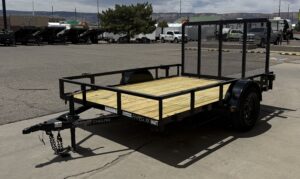
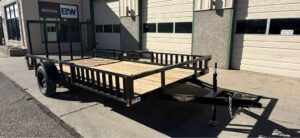
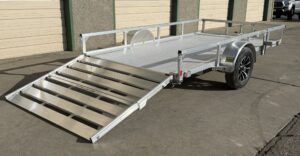
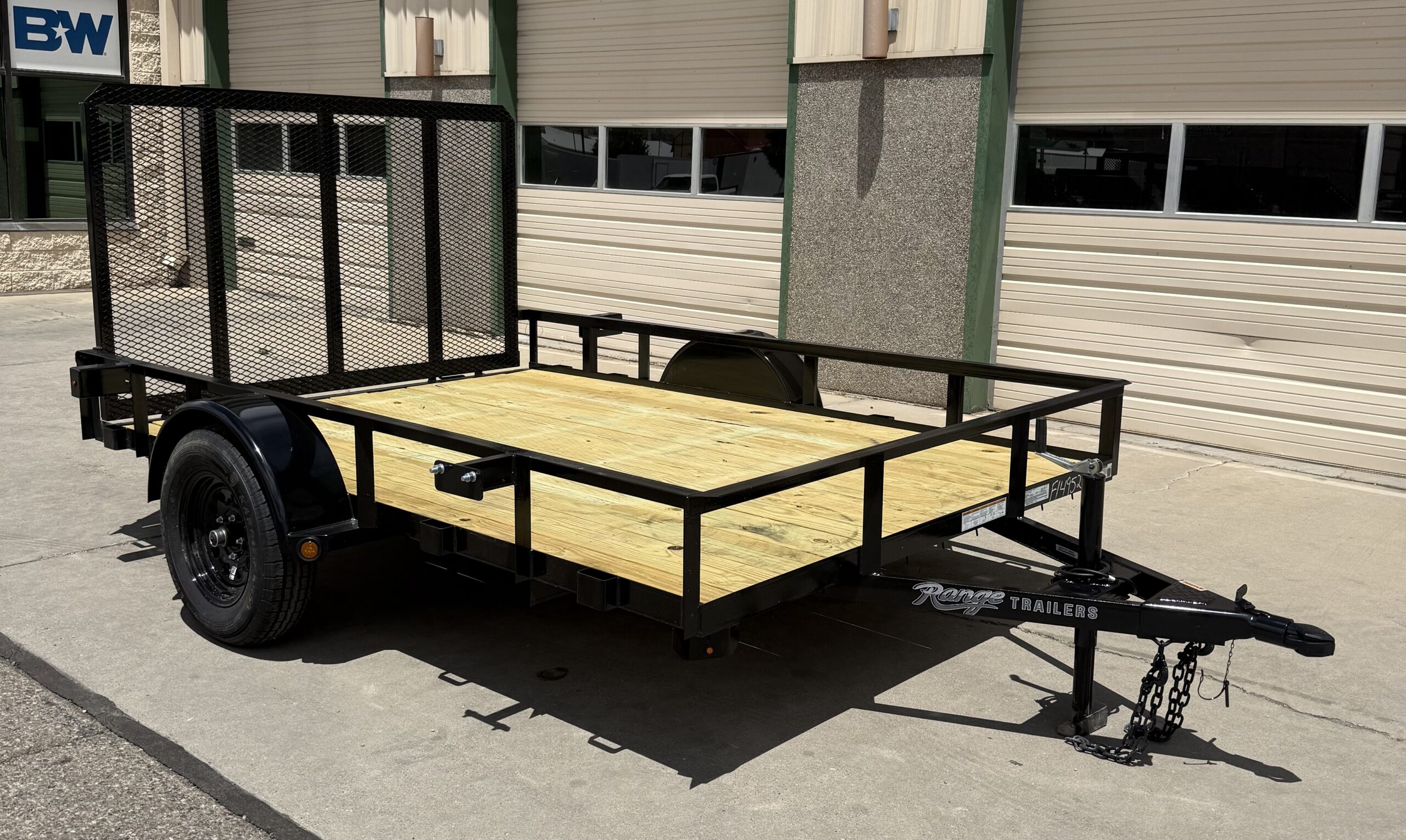
Standard utility trailers, also commonly referred to as UTV/ATV trailers or simply side-by-side trailers, are extremely versatile. Obviously they’re great at transporting the vehicles we just mentioned, but for homeowners, ranchers, and light contractors they can move furniture, contracting supplies, landscaping materials, construction debris, and even smaller livestock. That said, these standard utility trailers aren’t typically designed for heavier loads so bear that in mind.
Landscape Trailers
Landscape trailers are similar to standard utility trailers but typically come with stronger steel construction for heavier loads, integrated racks for tools, and a reinforced ramp gate for heavy use. In other words, they’re specifically built to handle the work professional landscapers and lawn care contractors do. That makes them ideal for those individuals, but likely too specialized for anyone else.
Dump Trailers
For contractors, ranchers, and municipal teams hauling bulk materials like gravel, dirt, or mulch, buying a dump trailer is often essential. These specialized utility trailers are specifically designed to both carry extra heavy loads and make it easier to deposit those loads via a hydraulic lift. That means the entire trailer bed lifts up to quickly and easily dump its contents wherever they need to go.
Car Haulers
Car haulers are utility trailers built to transport all kinds of recreational vehicles around either the Western Slope or New Mexico desert. That includes ATVs, dirt bikes, and even cars themselves. Like many of the other specialized trailer types, they’re built to handle extra heavy loads alongside special features like higher side rails, a sloped rear to make it easier to load vehicles, and strong tie-down points.
Equipment Trailers
Finally, there are purpose-built equipment trailers designed to move commercial-grade machinery like skid steers, tractors, or even excavators. Once again, they use heavy steel frames to support the weight of such equipment alongside loading ramps that makes it easier to get that equipment onto the trailer. They also often have deck structures with partial walls or rails to help transport assorted equipment alongside those bigger vehicles.
Benefits of Open Trailers
Now that you understand the basic differences and types, what exactly are the benefits of open utility trailers? Unless you’re moving specific types of gear that literally won’t fit in an enclosed trailer, you’ll still want to understand these key factors to make the right decision.
- Lower upfront cost: All the material needed to enclose a trailer costs money, which is why open utility trailers are generally less expensive. You can get cheaper enclosed trailers and expensive open trailers, but this is generally true.
- Lighter weight: Enclosing a trailer also adds a lot of weight. If you plan on transporting heavy things like construction materials or debris, you might want that lighter weight so you can maximize the weight you can haul.
- Easy to load & unload: While not all open utility trailers offer hydraulic mechanisms to dump their contents, they are generally easier to load and unload compared to their enclosed counterparts.
- Easy to maintain: The material needed to enclose a trailer doesn’t just add weight and cost, it needs to be maintained. That alone makes open utility trailers easier to take care of in the long-run.
- Better visibility: Being able to easily see what’s in your trailer can be the difference between leaving gear behind or not. That visibility is an often overlooked advantage is worth considering.
Disadvantages of Open Trailers
Despite all the benefits of open utility trailers we’ve listed, they aren’t right for everybody. Here are some disadvantages of open utility trailers you should be aware of if you’re looking to potentially buy one.
- Exposed to elements: You may not get much rain or snow in much of New Mexico but you certainly do on the Western Slope. Sun, sand, dry air, all of it can damage equipment you’re transporting when your trailer is open.
- Exposed to potential damage: That same exposure to the elements also means exposure to potential damage. Everything from rocks kicked up on the highway to hailstones can damage anything you’re hauling. So if you’re moving equipment that’s susceptible to damage, this is worth considering.
- Lack of security: Open utility trailers are also far easier for thieves to access. You can mitigate this by purchasing the right kind of insurance, but theft is still a risk when it comes to open trailers.
- Less resale value: Because open utility trailers tend to take a beating from the elements, their resale value often takes a hit as a result. You can mitigate this with proper maintenance, but it will still likely be a factor.
Types of Enclosed Trailers
Now that you’re familiar with all the types, benefits, etc. of open utility trailers it’s time to look at enclosed utility trailers. That begins with understanding the basic types you’ll find out there and who they’re for.
Standard Cargo Trailers
Standard cargo trailers are, as their name implies, the standard for contractors and homeowners who need lockable and weatherproof storage they can transport. These trailers generally have a basic design with flat fronts and sides that keep costs down. The flip side is that they are less aerodynamic and are generally on the smaller side.
V-Nose Trailers
While standard cargo trailers have flat fronts that will catch the wind while you drive, the v-nose variants improve both aerodynamics and fuel efficiency. If you’re a contractor or fleet operator who routinely transports your enclosed trailer long distances, it’s well worth investing in a v-nose design for the extra savings it brings.
Car Haulers
If you need to transport vehicles like cars, or side-by-sides without worrying about potential thieves having easy access, enclosed car haulers are the solution. They’ve got reinforced flooring, heavy-duty axles, dovetails for easy loading, d-rings for securing your vehicle inside the trailer and ramp doors to get vehicles inside and ensure their weight isn’t an issue, but that enclosure’s added weather and theft protection is the real selling point.
Motorcycle / ATV Trailers
Enclosed motorcycle or ATV trailers are, like car haulers, all about giving your vehicles more protection against thieves and the elements. You can expect purpose-built tie-down systems, wheel chocks, and ventilation features to control temperatures in the summer. For hauling smaller vehicles like bikes or quads across the rough terrain of the Western Slope, these are a great choice.
Enclosed Equipment Trailers
For contractors and fleet operators who need a way to transport equipment between job sites while keeping it dry and secure, enclosed equipment trailers are ideal. They’re built tough and generally come with specialized racks to make moving gear easier. Whether you need the added protection or just the reduced liability, enclosing important equipment like this can be a worthwhile investment.
Benefits of Enclosed Trailers
While you can see the benefits of enclosed trailers for specific use cases in the examples we just shared, it’s also worth looking at the general benefits you can expect from all types.
- Weather protection: Whether you’re worried about sun, rain, or even hail, keeping your gear protected from the weather can mean helping that gear last longer. For many, that alone is worth the added cost of an enclosed utility trailer.
- Better security: Tarps can help but there’s really no hiding what you’re transporting in an open trailer. Enclosed trailers keep what you’re hauling from prying eyes and gives you an added layer of security.
- Can function as a mobile workspace: If you need a flexible mobile space, an enclosed utility trailer can easily become a place to work or relax if needed. For anyone working in remote areas, that can be a huge benefit.
- Higher resale value: While enclosed utility trailers are generally more expensive, that also translates into higher resale values. So it’s worth considering how much of that initial investment you might get back when you sell the trailer down the line.
Disadvantages of Enclosed Trailers
For all their advantages, there are also some disadvantages of enclosed trailers you’ll need to give some thought to. Here’s a handy list of the most relevant ones for most prospective buyers.
- Higher upfront cost: As mentioned, enclosed trailers are generally more expensive than their open counterparts. They also have higher resale value, but that might not come into play for years.
- Heavier to tow: The enclosures of these trailers can add quite a bit of weight. That means poorer fuel economy and less weight to allocate to the stuff you’re actually hauling.
- Loading restrictions: The roof and sides of an enclosed trailer do create limitations on what you can load in terms of height and width. That’s why you’ll need to carefully consider what you’ll be transporting before pulling the trigger on one.
- Increased maintenance: The added material that comes with enclosed trailers means there’s more to maintain. It’s best to familiarize yourself with the maintenance needs of an enclosed trailer before buying one.
- Less visibility: If you’re the kind of person who often forgets to pack something, the fact that enclosed trailers hide their contents might lead to some issues. It’s not a huge deal for most, but it’s worth thinking about.
Which Trailer Type Best Fits Your Needs?
If it’s not already clear from the information we’ve shared, here’s another easy way to evaluate open vs enclosed utility trailers based on the kind of buyer you are. This won’t apply equally to every type of contractor, rancher, or homeowner, but it can serve as a starting point for thinking about your needs.
| Buyer Type | Best Open Trailer | Best Enclosed Trailer |
| Contractor | Equipment trailer, dump trailer, landscape trailer | Standard cargo trailer, enclosed equipment trailer |
| Rancher | Utility trailer, dump trailer | Enclosed equipment trailer |
| Homeowner | Utility trailer | Standard cargo trailer |
| Fleet Operator | Equipment trailer, dump trailer | V-nose trailer, enclosed equipment trailer |
| Recreational Buyer | Car hauler | Enclosed car hauler, motorcycle / ATV trailer |
| Municipal Team | Equipment trailer, dump trailer | Enclosed equipment trailer |
Open vs Enclosed Trailer FAQs
How much does an open trailer cost compared to an enclosed trailer?
While there’s obviously a lot of variation, in general you can expect an open trailer to cost 40% to 60% less than an enclosed trailer with similar specs.
How long do enclosed trailers last compared to open trailers?
While open trailers usually last 10-15 years, a high-quality and properly maintained enclosed trailer can last 20 or even 25+ years. The biggest factor is going to be the material it’s made from and the maintenance you provide.
Can I add a lock to an open trailer to improve security?
Absolutely. It’s easy to add locks to an open trailer to make it harder to either remove and steal the entire trailer or to lock down individual items within the trailer.
What is the best trailer for hauling horses or livestock?
While open utility trailers can transport some smaller livestock, enclosed trailers are generally preferred. Often that will mean a specialized horse or stock trailer specifically designed for the animals you need to move.
Do I need a special license to tow an enclosed trailer in Colorado or New Mexico?
It depends. For personal, non-commercial uses, you don’t need a special license in either state. But if the trailer is used for commercial purposes or exceeds state-specific weight limits you will need a commercial driver’s license to tow it.
Get Help Choosing the Right Trailer at Pine Country Truck and Trailer
With so many types of open and enclosed utility trailers out there, even guides like this one can only go so far in helping you choose the right one. Sometimes you just need a specialist who knows the backroads of Colorado and New Mexico as well as you do to help you decide what features and types actually meet your needs.
Of course it helps if that person also has access to a huge inventory at a range of convenient locations around both states. Luckily, you’re one click away from getting in touch with just that kind of expert. Reach out to us anytime for reliable utility trailer expertise.