A lot goes into choosing a side-by-side or UTV trailer. You’ve got dimensions, the rated capacity of your towing vehicle, and so much more. But what often gets overlooked is the role geography, terrain, and the specific use cases you need play into the decision.
Here, we’re using our years of experience working with Colorado and New Mexico residents to help you factor in the unique challenges those states bring.
Start With Your UTV, Not the Trailer
It’s easy to focus on the trailer itself, but your first step is actually to understand the realities of your UTV. If you simply look at your UTV’s published spec sheet and find a trailer that can accommodate those specs, you may be in for a nasty surprise. This is because accessories like tires and aftermarket suspension typically add weight and width that can quickly make a trailer that works on paper a non-starter.
Measure Width With Everything Attached
Understanding your actual side-by-side or UTV trailer needs starts with looking at your UTV’s actual width. Instead of looking at the official number, you really need to measure this yourself. Be sure to include mirrors, wheel spacers, and any accessories that you use. If you’re just buying a UTV and aren’t sure what you’ll add to it later, adding five to six inches of clearance on either side should generally ensure you have space for any aftermarket accessories.
Deck Length and Seating Configuration
When it comes to determining the trailer deck length you need to, start with seating configuration and consider accessories again. For example, two-seat UTVs typically require a 12-14 foot deck while four-seaters need 14-16 feet. But once again, the seating configuration is only part of the story. If you plan to carry gear or fuel alongside your UTV you should plan for that extra size when selecting the deck length of a trailer. It’s always better to have a little extra space rather than planning for a tight fit.
UTV Weight: GVWR, Payload, and Tongue Load
Like with UTV size, figuring out how much weight you should account for isn’t as straightforward as you might think. Instead of looking at the weight of the UTV itself, you need to account for your UTV’s loaded weight including any fluids, cargo, or accessories you plan to carry. Both your trailer and truck need to be able to handle that weight.
Lastly, it’s extremely important to balance that trailer weight properly, with 60% in the front half and 40% in the rear. This ensures you’re not putting too much weight on your hitch, which can cause stability issues on mountain roads and at higher speeds.
Types of Side-By-Side and UTV Trailers
Once you have a clear idea of the dimensions and weight you need your side-by-side or UTV trailer to handle, you can consider the four major types. The right choice here is going to depend on how many trips you take, what kind of storage you need, what kind of terrain you’ll be traveling on, and whether the trailer will serve double duty for work or gear hauling.
Trailer Type Comparison
| Trailer Type | Best Use Case | Typical Deck Dimensions | Primary Tradeoff |
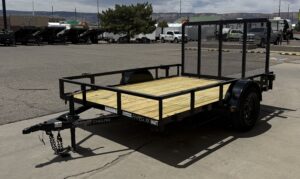
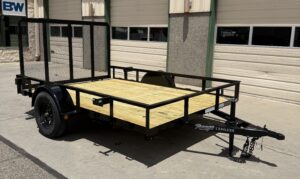
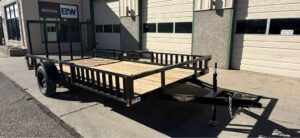
| Open utility trailer | Local and regional hauling, multi-use (gear, equipment, recreational) | 12-16 ft long x 60-76 in wide | No weather protection; UTV is exposed to road debris and theft during transit |
| Enclosed trailer | Long-distance hauling, overnight stops, dual use as storage or gear staging area | 14-20 ft long x 72-96 in wide | Higher cost, added wind resistance, greater tow vehicle demand; height limits lifted machines |
| Tilt trailer | Solo loading, frequent hauling, machines with low ground clearance or skid plates | 12-16 ft long x 60-76 in wide | Higher price point than ramp-gate equivalents; hydraulic mechanism adds maintenance consideration |
| Flatbed / car-hauler | Heavy or wide machines, mixed hauling alongside other equipment, commercial use | 14-20 ft long x 82-102 in wide | Less versatile for general cargo; exposed load with no side walls or weather protection |
A useful way to think about these types is how they match your lifestyle. An open utility trailer is great for someone with a suburban home who takes day trips to trailheads or hunting access roads. If you get a lot of snow in the mountains and want to protect expensive equipment, an enclosed trailer is a good option. Someone who hauls on their own or is a bit older might prefer the ease of a tilt trailer, while a flatbed is great if you need to use it for a lot of different types of equipment.
Loading Systems: Tilt vs. Ramp
Like we mentioned above, the loading system can play a big role if you’re using a trailer by yourself or just don’t want to deal with the challenges of a ramp. Here’s what to consider when comparing the two.
Tilt Trailers
This trailer type avoids you having to drive or push your vehicle up a ramp by having the entire trailer deck pivot on a hinge via gravity or a hydraulic system. The result is a shallower approach that is far easier to load, especially if you are by yourself. So if you plan to load and unload your trailer often or just want an easier time when you do, this is a great option. Tilt trailers are also particularly well suited for lifted or modified machines .
Ramp Gates
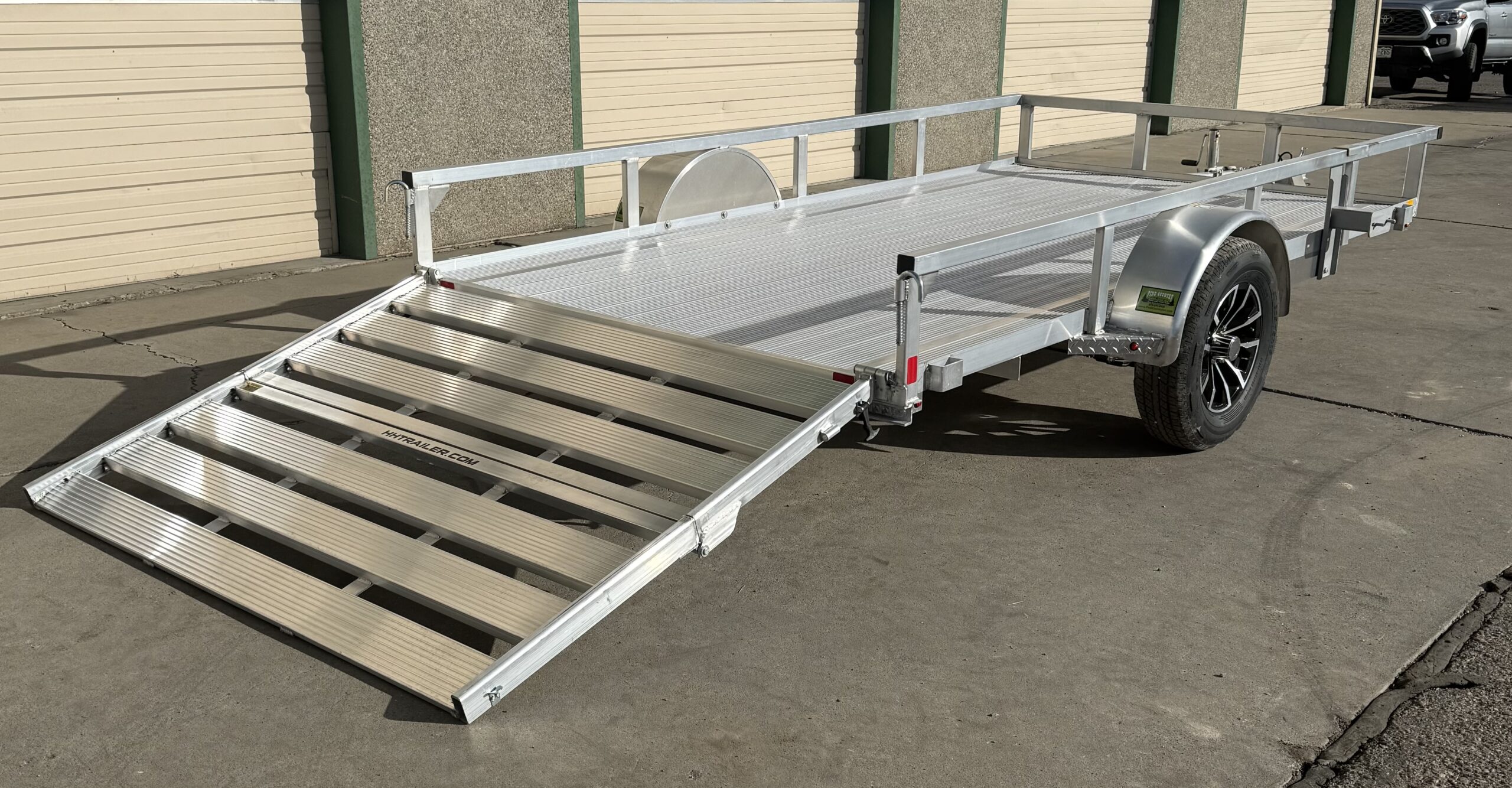
Trailers with ramp gates are more common because they’re less complex and expensive than tilt trailers. To get your UTV on these trailers you need to unlock and lower the ramp before slowly driving up in a low gear. This can be difficult or dangerous if done incorrectly or alone, particularly on uneven ground. The type of hinge and length of the ramp also play a major role, with springs or hydraulic systems often assisting with lowering the ramp and shorter ramps creating steeper angles that make loading more challenging.
Single Axle vs. Tandem Axle for UTV Trailers
Another major consideration when looking at UTV trailers is whether a single axle or tandem axle setup makes sense for your needs. The weight of your machine, how long you travel with it, and the type of roads you travel on are all factors you’ll need to consider.
Single Axle
Because a single axle trailer puts most of the weight it carries on that one axle and set of wheels, it’s better suited for lighter two-seat machines. That single axle layout also makes these trailers more maneuverable. Lastly, the simpler design means these trailers are less expensive. Taken together, if you have a two-seater machine, generally don’t travel far, and prefer lower costs and more maneuverability over the greater stability of tandem axles, this is a great option.
Tandem Axle
If you have a four-seat UTV or just a UTV that’s heavier than average, you might need a tandem axle trailer to handle that extra weight. These trailers may be less maneuverable but they are much more stable, making them great for long-distrance travel or just moving on roads with higher grades or tougher conditions. Of course, all of this comes with added cost compared to single axle trailers, but if you travel far, use rough roads, or need to move heavier machines, it’s worth the investment.
Trailer Tires, Axle Rating, and Brakes
Focusing on the number of axles and loading system makes sense, but you can’t neglect the types of tires, brakes, and axle rating of a trailer as well. Here’s what to look out for and how to decide what’s best for you.
Axle Load Rating
The axle load rating, also known as Gross Axle Weight Rating or GAWR, tells you how much weight each axle of a trailer can safely support. So, for example, if a trailer has two axles with GAWRs of 2,500 lbs each, the total capacity is 5,000 lbs. When comparing this to the weight of your machine, it’s important to think about the gear and aftermarket accessories you’ll be moving in addition to the UTV itself. Also always be sure to factor in the empty weight of your trailer and leave yourself ample wiggle room here to account for those addons and avoid overloading your trailer.
Tire Load Range
This refers both to the amount of weight a tire can handle and its durability. The ratings go from B through to H and up, with later letters indicating tires that are more durable and able to handle more weight. In general, if your trailer is going to carry heavier machines on the highway, you’ll want at least a G rated tire. The majority of single axle trailers and 5 lug axles will come from the manufacturer with 6 or 8 ply load range C or D tires. 6 lug axles will usually come from the manufacturer with 8 or 10 ply tires, and 8 lug axles will come with load range 10 or higher.
Be sure to check this rating because tires with the wrong load range or even standard passenger-car tires on a trailer can cause serious stability issues when driving at higher speeds.
Trailer Brakes
There are plenty of good reasons trailer brakes are a requirement, not just a suggestion. They both reduce wear on tow vehicles and ensure your entire setup can safely stop and slow down when needed. Without them, your tow vehicle’s brakes would wear out dangerously fast, especially if you drive on the mountain grades that are so common throughout Colorado and New Mexico.
Aluminum vs. Steel Trailer Frames
Another consideration you’ll need to make when buying a side-by-side or UTV trailer is whether to go with an aluminum or steel frame. This is a long-term decision tied to the capabilities of your tow vehicle, how much maintenance you’ll need to do, the roads you will travel, and even your trailer’s resale value.
Aluminum Frames
For a lot of buyers in Colorado and New Mexico, the higher upfront cost of an aluminum frame trailer is worth it. They weigh less, letting you both use less fuel and can devote more of your vehicle’s payload capacity to hauling UTVs instead of the trailer itself. Aluminum is also rust and corrosion resistant, a major advantage in both the wet mountains of Colorado and high desert conditions of New Mexico. For all these reasons, aluminum trailers also tend to have stronger resale value.
Steel Frames
While aluminum is better suited for most Colorado and New Mexico residents, steel frames have their benefits. For example, they tend to have a lower upfront cost and the strength of steel means they’re much more resistant to impact damage. It also tends to be easier to get steel frame trailers repaired in more rural areas. But obviously steel is much heavier, so you’ll use more gas and be able to haul less. It’s also more prone to corrosion in wetter climates, so keep that in mind if you live somewhere like the Colorado mountains.
Confirming Tow Vehicle Compatibility
Before making any trailer purchase, it’s extremely important to verify it’s compatible with your intended tow vehicle. That means both that it can tow the weight and that its hitch can handle the tongue weight because this isn’t something you can just change later. Here’s what to look out for.
Gross Vehicle Weight Rating and Tow Capacity
You can find your vehicle’s rated tow capacity on the safety certification sticker inside the driver’s side door jamb. It’s important to understand that this is the gross weight, so it has to cover the weight of the trailer itself as well as a fully loaded UTV. That said, you don’t want to cut this close, because adding later accessories or even upgrading your UTV can add weight. Another reason to ensure you’re not towing near capacity is that operating at higher altitudes reduces engine output, meaning you won’t be able to tow as much.
Tongue Weight and Hitch Class
Beyond the gross weight of the trailer, UTV, and gear, you need to consider your vehicle’s tongue weight and hitch class. Tongue weight is the weight a trailer puts on your truck’s hitch and should be 10-15% of the total loaded weight of your trailer. You can measure it with a special tool or at a weighing station with a bit of math. In addition, your vehicle’s hitch class has to match or exceed the coupler rating of your trailer to be safe. Otherwise you’re putting extreme and dangerous stress on that potential point of failure.
Side by Side UTV Trailer FAQs
What is the best trailer for a side-by-side?
This depends largely on whether you need a dedicated lightweight open hauler or a more versatile flatbed. For example, for a standard 2-seater UTV, a 6.5 × 12 or 6.5 × 14 open aluminum trailer is ideal, while 4-door “crew” models require a 16 to 18-foot trailer.
What is the 60 rule for trailers?
The 60 rule, also known as the 60/40 rule, states that 60% of your trailer’s cargo weight should be on the front half ahead of the axles. The remaining 40% should be behind the axles. This helps ensure balance, stability, and safety when towing.
Do I need an enclosed side by side trailer?
Most people don’t need an enclosed side-by-side trailer. That said, if you travel long distances, need greater security, and want to protect your UTV from weather and road debris, an enclosed trailer might be worth the added cost. This also is beneficial as storage for your side-by-side if you’re limited on space.
Can I haul two UTVs on one trailer?
Yes, it is possible to haul two UTVs on a single trailer. But, doing so requires a large setup, typically a heavy-duty dual-axle trailer that’s at least 20-24 feet long and 7-8.5 feet wide.
Can any truck tow a UTV trailer?
Not every truck can tow a UTV trailer. It’s going to depend on the truck’s Gross Vehicle Weight Rating (GVWR). That number has to exceed the combined weight of your trailer, UTV, and any other accessories or gear you’re hauling. That’s possible with most full and mid-size trucks, but small trucks typically can’t handle that much weight.
Find Your Side-By-Side Trailer at Pine Country
If there’s one big takeaway here it’s that you have a huge number of factors to consider when buying a side-by-side or UTV trailer. That’s why it makes sense to go to the experts at Pine Country. We don’t just have extensive knowledge about trailers themselves, but we know the unique challenges you’ll face in Colorado and New Mexico. So if you’ve got a question or are ready to buy the ideal trailer for your UTV, get in touch.