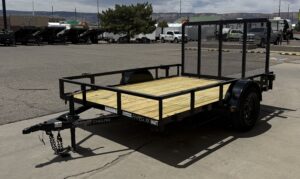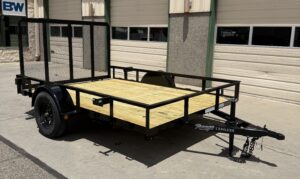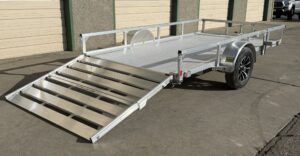
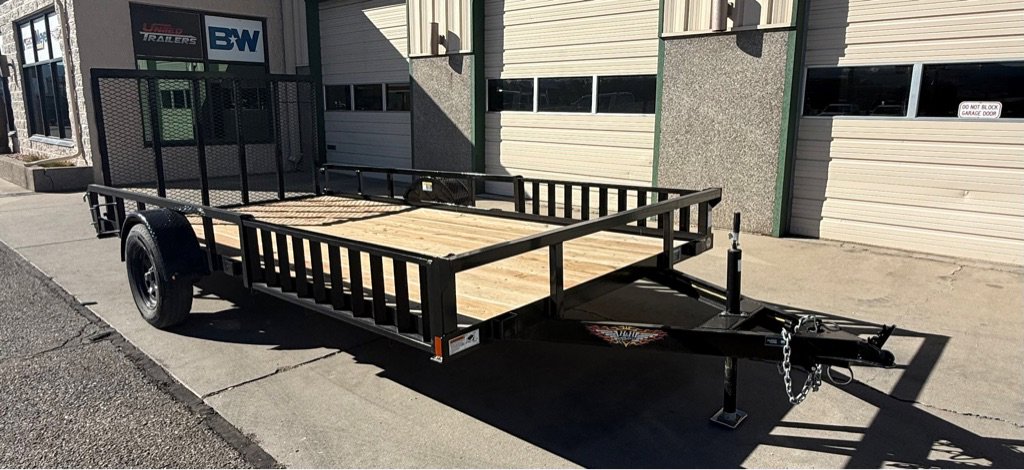
If you’re a homeowner who frequently needs to move landscaping materials, furniture, ATVs, or other large items a utility trailer is an excellent investment. The same applies to contractors and other professionals who need a flexible and practical way to haul heavy gear. It comes down to weighing the use you’ll get against the cost of ownership. Fortunately, we’re breaking that down to help you understand the value you can expect based on your needs.
What Makes a Utility Trailer Worth the Cost
In reality, you have three options here: buying a utility trailer, not buying or, or renting. Once you understand the type of utility trailer you would need, it’s worth looking at local rental options to see what day rates you can expect. Then, you can add up the number of days you would likely use the trailer each year to get a rough idea of the annual cost of rental.
Now you can look at the purchase cost of that same trailer and see how many years you would need to use it to match the cost of rental. Of course you’ll want to add basic maintenance costs, consider its resale value, and factor in storage if that’s relevant for you.
For example, let’s say the utility trailer you need costs $4,000 new or $100 a day to rent and you expect to use it about 15 days a year. You can find used versions of that same trailer for around $2,500. That means as long as you plan to use the trailer for more than a year or two it makes sense to buy.
Renting vs Owning a Utility Trailer
| Renting | Owning | |
| Upfront cost | None | Purchase price (varies by size & type) |
| Per-use cost | $90–$150/day typical rental rate | None after purchase |
| Availability | Subject to inventory and location | On demand |
| Maintenance | None | Minimal (tires, lights, axle grease) |
| Long-term cost | Compounds indefinitely | Fixed, declines over time |
| Resale value | None | Retains meaningful value with upkeep |
Who Gets the Most Value from a Utility Trailer
Besides considering the basic numbers around ownership and maintenance, it’s helpful to think about how you’ll use a utility trailer. How often you use it and for what purpose play a major role in determining whether it’s worth investing in one. Here, we break down five types of people who often use them in Colorado and New Mexico and some benefits they can expect.
Home & Property Owners
While the decision to invest in a utility trailer is quite easy for many on this list, regular property owners often face more questions. One thing to consider is whether you have a lot of land. Here, moving around landscaping materials and yard waste can easily justify the cost of purchase. If you often haul other heavy items like furniture, a utility trailer makes sense. If you live in a rural part of Colorado or New Mexico, also factor in whether you have easy access to a rental location.
Contractors
For most contractors, investing in a utility trailer is a no-brainer. The ease with which it enables you to move tools and materials between job sites just can’t be matched by a simple truck. Everything from ease of loading and unloading to flexibility and total capacity are superior, meaning each job gets just that much easier. Investing in a well-maintained and purpose-built trailer also communicates a level of professionalism any contractor should aspire to.
Ranch & Farm Operations
Utility trailers are the backbone of Colorado and New Mexico farms and ranches. Their ability to handle everything from fencing materials and livestock feed to irrigation equipment and utility vehicles shows just why they’re relied on so heavily. But utility is just one part of that equation. These states can have tough conditions including extreme heat, cold, and plain old rough terrain. The durability of utility trailers helps them survive and thrive in these conditions, ensuring they can do their jobs for years or even decades when well maintained.
Municipal Teams
With the sheer size of most counties across Colorado and New Mexico, municipal teams need the ability to efficiently haul gear long distances. That might mean grounds maintenance equipment, generators, concrete mixers, or even mini excavators. Flexibility is key because the sheer diversity of gear teams need to transport for their various public works and facilities maintenance operations can be daunting. Long-lasting and hard-wearing utility trailers are ideal for these jobs, combining durability and that key flexibility to get more jobs done.
Outdoor Recreationists
Living amongst the stunning nature and wildlife of Colorado and New Mexico without having a way to easily access it is a real shame. It’s no wonder so many residents use ATVs and UTVs to hunt or just explore the backcountry. But transporting those vehicles really requires a utility trailer capable of both moving the gear itself and navigating the tough conditions of remote access roads and poor weather alike. These trailers also enable outdoor recreationists to significantly extend what a single vehicle can otherwise haul into the field.
Utility Trailer Benefits Beyond the Purchase Price
We may have explained the basic math you need to determine whether a utility trailer is a good investment, but that’s not all you should consider. Outside of those considerations, you need to factor in things like how its use affects your primary vehicle and how you might use it in unexpected situations outside of the warmer months.
Reduced Wear on Your Primary Vehicle
Even if you already have a truck built to haul heavy loads, doing that still puts serious strain on that vehicle. Your tires, suspension, transmission, brakes, and more will all wear out faster from the extra strain. A properly loaded trailer distributes all that weight more effectively and uses its own tires and brakes to spread that strain and protect your truck. Considering what you likely invested in that truck and the cost of extra maintenance and parts, it’s worth factoring this into your decision.
Resale & Long-Term Asset Value
We mentioned this when discussing how to calculate whether investing in a utility trailer is worth it. But it’s an important enough consideration to go into more detail on. When well maintained, a quality trailer can hold onto its value for years before being resold or traded while retaining meaningful equity. That applies to lightweight and corrosion resistance aluminum models as well as durable steel frame models. It’s good to know that if you ever need to downsize or upgrade, reselling a utility trailer is always an option.
Versatility Across Seasons and Uses
It’s easy to assume that you can only really use a utility trailer when it’s warm, but the sheer variety of year-round uses they can have will surprise you. That can include landscaping work in the spring and summer, hauling debris and firewood in the fall, and simply transporting equipment in winter. You might help a friend move a piece of furniture, move a snow blower, or even decide to take a snowmobile out for a backcountry adventure.
What to Consider Before You Buy a Utility Trailer
If you’ve decided that buying a utility trailer makes sense, here’s a concise list of important buying considerations. Each one will help you understand exactly what to look for and how to find the perfect trailer for your exact needs.
Tow Vehicle Capacity
This one is absolutely essential. If your tow vehicle can’t handle the weight of your utility trailer and the gear you’ve loaded onto it, suddenly that trailer turns into a very large paperweight. Check the tow rating of your vehicle by referencing the safety certification sticker inside the driver’s side door jamb. Then compare that to the weight of your intended utility trailer along with any vehicles, gear, etc. you might possibly haul with it.
Intended Load Types
Whether you intend to use your utility trailer to haul UTVs, firewood, or furniture will all affect what kind of trailer you need. For example, if you want to transport two side-by-sides you’ll need a deck size capable of carrying them and any accessories. If you plan to use the trailer alone, a tilt trailer might be a good investment. Also consider the payload rating of your trailer and make sure it’s sufficient for the items you need to transport.
Open vs. Enclosed Configuration
Open trailers are understandably less expensive than their enclosed counterparts, but being open also means they’re open to the elements. Enclosed trailers protect both themselves and the gear you’re hauling from rain, wind, and snow, but they’re more expensive and create more drag when driving, impacting fuel efficiency. So consider how much you’re willing to spend and whether weather protection is worth the added cost.
Trailer Size and Weight Rating
We mentioned how and why you need to calculate the size and weight of the gear you plan on hauling. But keep in mind that buying a trailer to match your exact needs can put you in a bind when those needs change. It’s generally best to buy up in size rather than matching your current needs exactly. Not having to sell your existing trailer to size up later can make that extra investment worth it in the long-run.
Whether you’re buying a utility trailer for the first time or looking for maintenance and parts, expertise is key. At Pine Country, we’re utility trailer experts ready to use our deep knowledge to help you. That expertise includes all the specialized experience that comes with using utility trailers all over Colorado and New Mexico, meaning we know how to find the right trailer for you whether you’re a rancher or a regular homeowner.
That’s on top of our extensive utility trailer inventory, outstanding service department, and great parts availability. If your trailer needs maintenance work, use our parts & service request form to get the help you need quickly. Or, if you have any other question you’d like answered by a seasoned utility trailer expert just get in touch.
Utility Trailer FAQs
Is owning a utility trailer worth it?
If you need to haul gear that requires a utility trailer more than a few times a year, it’s usually worth the investment. Just compare the cost and hassle of renting vs buying to get a good idea of whether you should get one.
What are common problems with utility trailers?
Most utility trailer issues stem from poor maintenance and improper use. These include tire blowouts, faulty electrical wiring, unmaintained wheel bearings, rusted components, and suspension damage from overloading.
What is the 60/40 rule for trailers?
The 60/40 rule states that 60% of your trailer’s cargo weight should be on the front half ahead of the axles. The remaining 40% should be behind the axles. This helps ensure balance, stability, and safety when towing.
What is the most profitable trailer type?
Because of their lower cost, open utility trailers tend to be the most economical and profitable for commercial enterprises. Of course this will depend on your exact needs.
How long does a utility trailer last?
If well-maintained, a standard utility trailer can last for 10-15 years. That said, higher-end heavy-duty aluminum models that are more resistant to rust and corrosion can often last 20-30 years.